.png?x-oss-process=image/resize,h_500,m_lfit/format,webp)

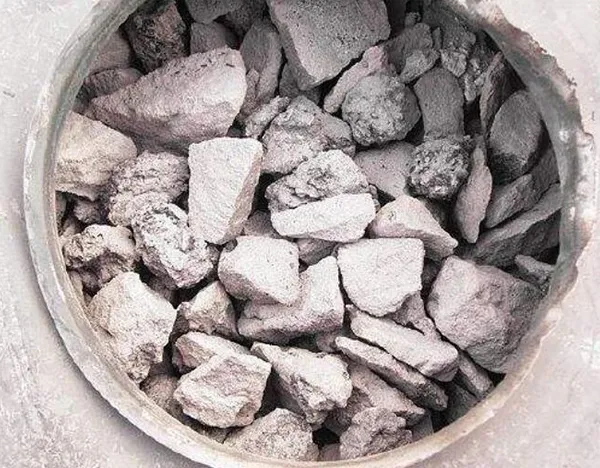
Solid calcium carbide (CaC2) is often treated like “just another bulk chemical.” In reality, it behaves more like a reactive moisture-triggered gas generator. Once damp air enters a bag or drum, carbide starts converting to acetylene (C2H2) and calcium hydroxide—causing heat, pressure, quality loss, and severe safety risk. This article focuses on three recurring storage misconceptions and provides field-proven anti-humidity measures for chemical plants, building-material factories, and welding consumable distributors.
Calcium carbide reacts vigorously with water: CaC2 + 2H2O → C2H2 + Ca(OH)2. In practical warehousing terms, a “small” leak in packaging can scale into a big event because carbide is dense and stored by the ton.
| Reference metric | Typical value | What it means in storage |
|---|---|---|
| Acetylene yield from 1 kg CaC2 | ≈ 0.35 m³ C2H2 (STP) | Even partial moisture exposure can generate notable gas volume in a confined package. |
| Moisture sensitivity threshold (warehouse reality) | RH > 60% increases risk sharply | Many non-conditioned warehouses drift above 60% RH for weeks in rainy seasons. |
| Condensation trigger | Surface temp below dew point | “Dry air” is not enough if metal drums cool at night and water films form. |
| Economic loss pattern | 1–5% mass loss can be invisible early | Loss often shows up later as unstable acetylene generation, blocked generators, or lower process yield. |
Those numbers are why moisture control for carbide is not “nice to have.” It is the difference between predictable production and a preventable incident report.
Many storage failures start with packaging that appears fine at a glance. Micro-leaks at seams, valve areas, or pallet abrasion points let humid air diffuse inside. The first visible signs—powdery residue, caking, local warmth, or a faint odor—often appear after performance has already degraded.

A workable approach is to treat packaging as a barrier system, not a container. For industrial carbide storage, many plants tighten receiving criteria around three practical controls:
Ventilation improves air movement, but it does not guarantee low moisture. In monsoon seasons or coastal regions, “fresh air” can be the most humid air of the day. Worse, ventilation can increase dew point swings: warm, humid daytime air entering a cooler warehouse can condense on drums, racks, or walls at night.
Effective moisture prevention comes from controlling relative humidity and preventing condensation. Many factories operate stable storage by aiming for: RH ≤ 50% in the carbide zone, and a steady temperature profile to reduce dew-point crossings.
| Warehouse condition | Risk level | Recommended control | Typical equipment |
|---|---|---|---|
| RH 45–55%, stable temperature | Low | Maintain, monitor, seal doors | Data loggers + door curtains |
| RH 55–70%, frequent rain season | Medium–High | Dehumidify + limit air exchange | Industrial dehumidifiers (desiccant or refrigerant) |
| Condensation visible on metal surfaces | Critical | Stop exposure; isolate stock; correct dew point | Desiccant dehumidification + insulation + airlocks |
| Open dock handling in humid weather | High | Shorten exposure time; cover pallets | Rapid roll-up doors + sealed wraps |
A practical implementation detail: continuous monitoring is more useful than spot checks. Low-cost data loggers placed at two heights (near floor and near pallet tops) often reveal stratification and hidden condensation zones.
Co-storage is where small mistakes become compound risks. Calcium carbide must be protected from moisture—and also from incompatibilities that can worsen an incident. A common misconception is that sealed containers remove the need for segregation. In real warehouses, packaging fails, pallets shift, and spill response must be immediate.

A simple, enforceable layout typically outperforms complex rules nobody remembers. Many sites adopt a “carbide island” concept: a dedicated zone with marked boundaries, controlled access, and a defined emergency kit.
In one frequently reported pattern across process industries, carbide stock is received in good condition, then stored near a loading bay. During a humid period, doors open repeatedly, and temperature swings create intermittent condensation on outer packaging. Weeks later, the acetylene generator shows unstable flow, sludge accumulation increases, and operators notice unusual residue around a subset of containers. The root cause is rarely “one big leak”—it is many small humidity hits over time.
The operational takeaway is plain: storage needs the same discipline as a production line—measured conditions, controlled handling time, and documented checks.
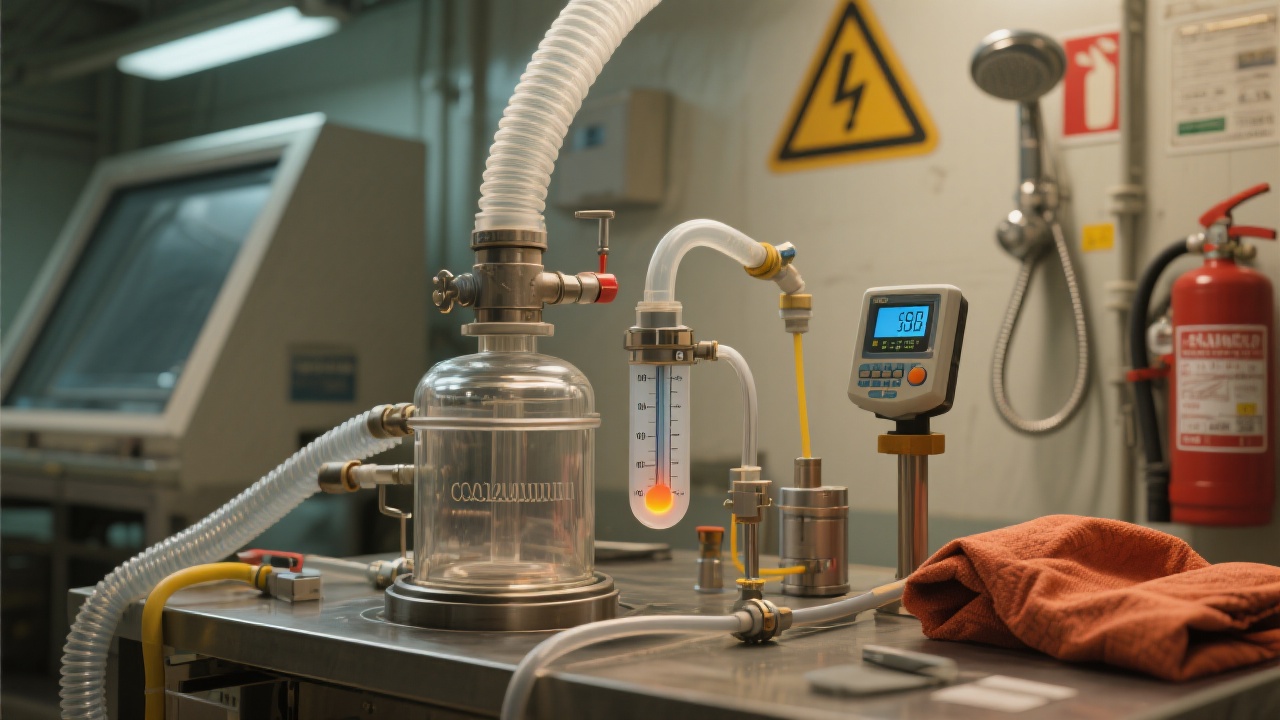
For most warehouses, an actionable target is RH 40–50% in the carbide zone, with alarms if RH rises above 55–60%. Monitoring should include: a wall-mounted display for operators, plus data logs for audits and incident learning.
Moisture ingress often happens after partial use. Once a container is opened, it becomes a race against time and humidity. Many plants reduce deterioration by enforcing “open-use-close” procedures:
Plants that perform well typically combine moisture control with straightforward facility improvements:
Many facilities aim for 40–50% RH in the carbide zone and treat >55–60% RH as a corrective-action trigger—especially if temperature swings make condensation likely.
Only when outside air has a lower absolute moisture content than inside air. Otherwise, ventilation can import humidity and raise the dew point. If ventilation is required for general safety policy, it should be paired with humidity control and door/airflow discipline.
Condensation on metal drums or cold surfaces during night cooling. Operators may report “the warehouse is dry,” while thin water films appear briefly and repeatedly. Tracking dew point alongside RH helps reveal this pattern.
Request a technical reference pack covering humidity setpoints, packaging integrity checks, segregation layout, and a ready-to-use inspection log template—adaptable to chemical plants, building-material facilities, and welding supply warehouses.
Get the Calcium Carbide Storage & Moisture Control Technical Document → 433
|
433
|
 calcium carbide desulfurization
steel industry desulfurization
calcium carbide slag removal
desulfurization process optimization
electric arc furnace desulfurization
32
|
High - purity calcium carbide
Calcium carbide selection
Metallurgical raw materials
Process stability
Chemical raw materials
409
|
Calcium carbide storage safety
Acetylene gas leakage protection
Calcium carbide products
Inner Mongolia calcium carbide
Industrial chemical raw material safety
173
|
calcium carbide application cases
calcium carbide industrial uses
acetylene gas raw material
calcium carbide export experience
calcium carbide chemical applications
403
|
Calcium Carbide
high-stability chemicals
industrial raw materials
calcium carbide desulfurization
steel industry desulfurization
calcium carbide slag removal
desulfurization process optimization
electric arc furnace desulfurization
32
|
High - purity calcium carbide
Calcium carbide selection
Metallurgical raw materials
Process stability
Chemical raw materials
409
|
Calcium carbide storage safety
Acetylene gas leakage protection
Calcium carbide products
Inner Mongolia calcium carbide
Industrial chemical raw material safety
173
|
calcium carbide application cases
calcium carbide industrial uses
acetylene gas raw material
calcium carbide export experience
calcium carbide chemical applications
403
|
Calcium Carbide
high-stability chemicals
industrial raw materials






.png?x-oss-process=image/resize,h_600,m_lfit/format,webp)