This guide explains best practices for storing solid calcium carbide with a practical focus on three critical controls: humidity management, airtight packaging, and warehouse environmental governance. It outlines why keeping relative humidity below 75% is essential to prevent moisture ingress and product degradation, and provides actionable methods such as dehumidification, routine RH logging, and the correct use of desiccants. It also covers selection and inspection of sealed containers, handling procedures that minimize exposure time, and zoning rules to isolate calcium carbide from acids, oxidizers, and water sources. A real-world incident scenario is used to illustrate typical failure points and the resulting safety and operational losses, followed by daily inspection checkpoints and a basic emergency response framework to support safer, more reliable chemical warehousing. The recommendations align with common industrial chemical storage principles and are suitable for chemical plants, building-material manufacturers, and welding-supply distributors seeking more robust moisture prevention and site management. For deeper technical references and internal SOP templates, readers can consult Lonway Chemical documentation or contact its technical support channel.
Solid calcium carbide (commonly called carbide) is still one of those “quiet” industrial chemicals where storage discipline decides everything: product performance, worker safety, and whether a warehouse day stays routine or turns into an incident report. In real operations, most losses do not come from dramatic events—they come from slow moisture ingress: caked lumps, reduced acetylene yield, corroded packaging, and a rising risk profile in the storage area.
This guide lays out practical, warehouse-ready best practices for solid calcium carbide storage with three pillars: humidity control, packaging & sealing, and storage environment management. It is written for chemical plants, building-material factories, and welding consumables suppliers—any site where carbide is handled as a production-critical input.
Why Moisture Is the Real Enemy (and Why “Dry Enough” Is Not a Guess)
Calcium carbide reacts with water to produce acetylene gas and calcium hydroxide. That chemistry is useful in controlled generation systems—but destructive inside a package or on a warehouse pallet. Even small moisture exposure can trigger localized heating, pressure build-up, and product degradation.
A realistic loss pattern seen in warehouses
In humid regions, teams often report that once relative humidity (RH) stays above 75% for multiple days, the rate of “softening” and caking increases sharply—especially after repeated door openings and night-time condensation cycles. Many sites also observe measurable performance drop: acetylene yield can decline by 5–15% when carbide is partially hydrated or contaminated with fines from degraded lumps (values vary by grade and exposure duration).
For responsible operators, “dry” is an engineered condition. The baseline target used across many industrial chemical storage programs is to maintain storage RH below 75%—and to avoid rapid temperature swings that cause condensation on drums, lids, or inner liners.
Pillar 1 — Humidity Control: Keep RH Below 75% (and Make It Auditable)
A humidity program that cannot be verified will not survive shift changes. The most effective approach combines monitoring, dehumidification capacity, and clear response thresholds.
1) Instrumentation that supports decisions
Place at least 2–3 calibrated hygrometers per storage zone: near the loading door, at mid-aisle, and close to the back wall (where airflow can be weaker). Logging intervals of 5–15 minutes help capture door-opening spikes. As a practical reference, many facilities set calibration checks every 6–12 months, with out-of-range devices tagged and replaced immediately.
2) Dehumidification with clear triggers
Define action limits that operators can follow without interpretation: RH 65–70% (watch), 70–75% (start/boost dehumidifiers), >75% (restrict door time, pause receiving if needed, inspect packaging integrity). In coastal or monsoon climates, many warehouses size dehumidification to maintain stable RH during peak humidity weeks rather than average months.
3) Condensation prevention (often overlooked)
Condensation can form even when average RH looks acceptable. A common risk point is the early morning when cold surfaces meet warm, humid air. Keep internal temperatures stable when possible, avoid storing carbide next to exterior walls, and maintain airflow patterns that do not “dead-end” behind stacked pallets.
Quick-reference table: humidity targets & field actions
RH Range
Operational Risk
Recommended Actions
Evidence to Record
≤ 65%
Low
Maintain routine controls; minimize unnecessary door time
Daily log screenshot / report export
66–70%
Moderate
Pre-start dehumidifiers; verify seals on opened packs
In day-to-day warehouse reality, packaging is the first and last line of defense. A dehumidifier helps, but a compromised lid, worn gasket, or improperly re-sealed inner liner can undo an entire storage plan.
Recommended packaging practices (field-tested)
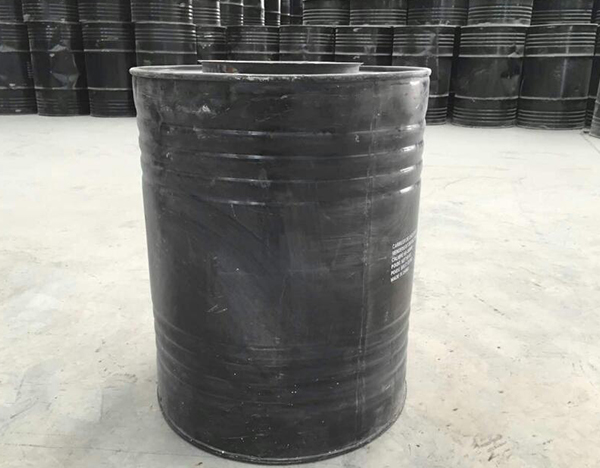
Prefer moisture-barrier inner liners (multi-layer or foil-laminated) inside sealed drums/steel pails, especially for long-distance inland transport + warehouse holding.
Use tamper-evident sealing so operators can spot re-opened units quickly during receiving checks.
Desiccants where appropriate: in many industrial storage setups, silica gel or molecular sieve packs are used in secondary packaging spaces (never loose-mixed with product). Typical guidance is to size desiccant to package volume and expected exposure time; for example, 50–200 g per drum-level headspace is commonly seen in moisture-sensitive chemical logistics (adjust to your packaging design and risk profile).
Resealing discipline for partial use: once a unit is opened, set a maximum “open time” policy, then re-pack in an inner barrier bag with heat seal or approved closure system.
Practical case pattern: how “small” seal failures become big losses
A common scenario in welding consumables distribution is mixed inventory handling: pallets move in and out frequently, and one partially opened drum is “temporarily” re-closed without checking gasket seating. Over 2–4 weeks in a warm, humid warehouse, moisture ingress can cause surface hydration and fines. When the batch reaches the acetylene generator, operators may notice unstable gas output and increased residue. The financial impact often comes not only from wasted carbide but from unplanned downtime—a cost that is typically larger than the material loss itself.
Carbide storage is not just about “dry.” It is about compatibility and control of exposure pathways. A good storage zone reduces the chance that water, acids, or reactive chemicals can reach the product—even during abnormal events.
Segregate incompatible materials
Keep carbide physically separated from acids, oxidizers, and water-bearing materials. Acid contact can accelerate undesired reactions and increase hazard. Use dedicated bays and clear floor markings; where possible, use barrier systems and labeled racks. The separation distance should follow internal EHS rules and local regulations, but the principle is consistent: do not rely on “labels only” separation.
Ventilation and ignition control
If moisture ingress occurs, acetylene may be generated. A safe design considers ventilation pathways and ignition source control (electrical classification, hot-work control, no open flames). Even if the storage intent is “no gas,” emergency assumptions must be realistic.
Receiving inspection: treat it as a quality gate
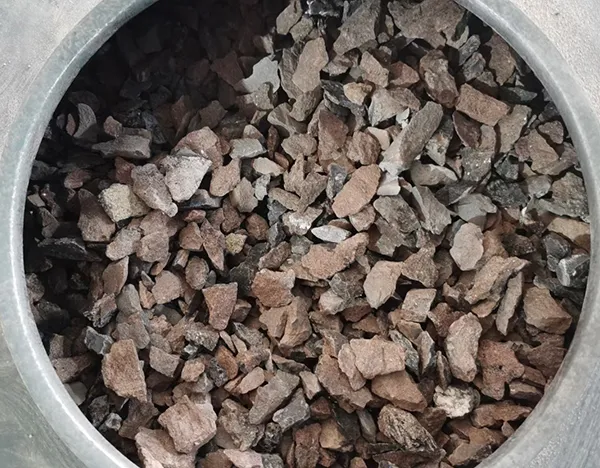
A fast but disciplined receiving check can catch most problems: look for bulging lids, wet staining, corrosion tracks, unusual odor, or damaged liners. Record batch/lot, arrival RH (if measured), and any corrective action. Sites that formalize this step often reduce “mystery yield loss” complaints later in production.
Daily Inspection Checklist (Interactive Template) + Simple Response Plan
Good carbide storage programs work because they are repeatable. Below is a practical inspection template that can be copied into a CMMS, printed for clipboard rounds, or converted into a mobile form. It is intentionally short—operators are more likely to complete it accurately.
Download-ready巡检表 (copy/paste)
Item
Pass/Fail
What to Check
Action if Fail
Humidity (RH)
☐ / ☐
Current RH + 24h peak (log)
Start/boost drying; restrict door time
Packaging integrity
☐ / ☐
Lid/gasket, dents, rust trails, liner seal
Isolate unit; notify supervisor; re-pack if allowed
Segregation zone
☐ / ☐
No acids/oxidizers/water sources nearby
Stop movement; correct storage locations
Floor & drainage
☐ / ☐
No standing water; no leaks; clean spills
Fix leak; cordon area; remove wet materials
Hot work / ignition sources
☐ / ☐
Permits, signage, electrical condition
Stop hot work; escalate to EHS
Tip: add a “Photo required if Fail” rule—warehouses using photo evidence often reduce repeat issues by 20–30% within one quarter through faster root-cause closure.
Mini emergency response (practical, not theoretical)
Stop access to the affected bay; limit door opening to reduce humidity influx.
Isolate suspect packages (bulging, wet staining, heat) to a controlled area per EHS instructions.
Improve ventilation safely if acetylene generation is suspected; remove ignition sources and follow site electrical safety rules.
Notify EHS/supervision and document RH, temperature, and observations with time stamps.
Do not “dry it with heat” or apply water. Any remediation must follow a qualified SOP.
FAQ: Questions Industrial Buyers and Warehouse Teams Actually Ask
What relative humidity is recommended for storing solid calcium carbide?
Many facilities use <75% RH as a practical upper limit, with tighter internal targets (e.g., ≤65–70%) for high-turnover zones or long storage durations. More important than a single number is avoiding prolonged periods above the limit and preventing condensation cycles.
Can desiccants be used inside carbide packaging?
Desiccants are commonly used in secondary spaces (headspace or outer packaging) when designed properly. They should not be loose-mixed with product. Selection and quantity should align with package volume, seal quality, transit time, and expected ambient humidity.
Should carbide be stored near acids if both are sealed?
Best practice is physical segregation. Packaging is not a perfect barrier over time, and abnormal events (drop damage, leaks, flooding) are exactly when compatibility matters most.
What are early signs that stored carbide has been exposed to moisture?
Common early indicators include caking, increased fines, warm spots on a drum/pail, corrosion tracks near closures, and inconsistent acetylene generation performance downstream. If any of these appear, isolate and follow the site’s EHS procedure.
2026-03-01|245|calcium carbide acetylene production unstable acetylene gas flow acetylene generator types welding safety procedures carbide water ratio adjustment
.png?x-oss-process=image/resize,h_500,m_lfit/format,webp)














.png?x-oss-process=image/resize,h_600,m_lfit/format,webp)