Calcium Carbide (CaC2) to Acetylene: Reaction Mechanism, Heat Release, and Lab Safety Against Phosphine Risks
Longwei Chemical
2026-03-24
Technical knowledge
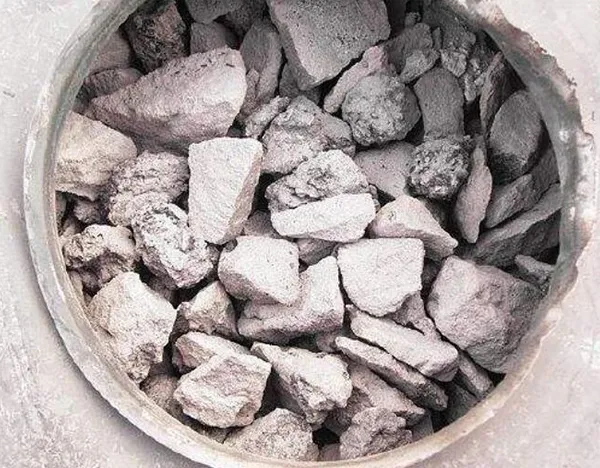
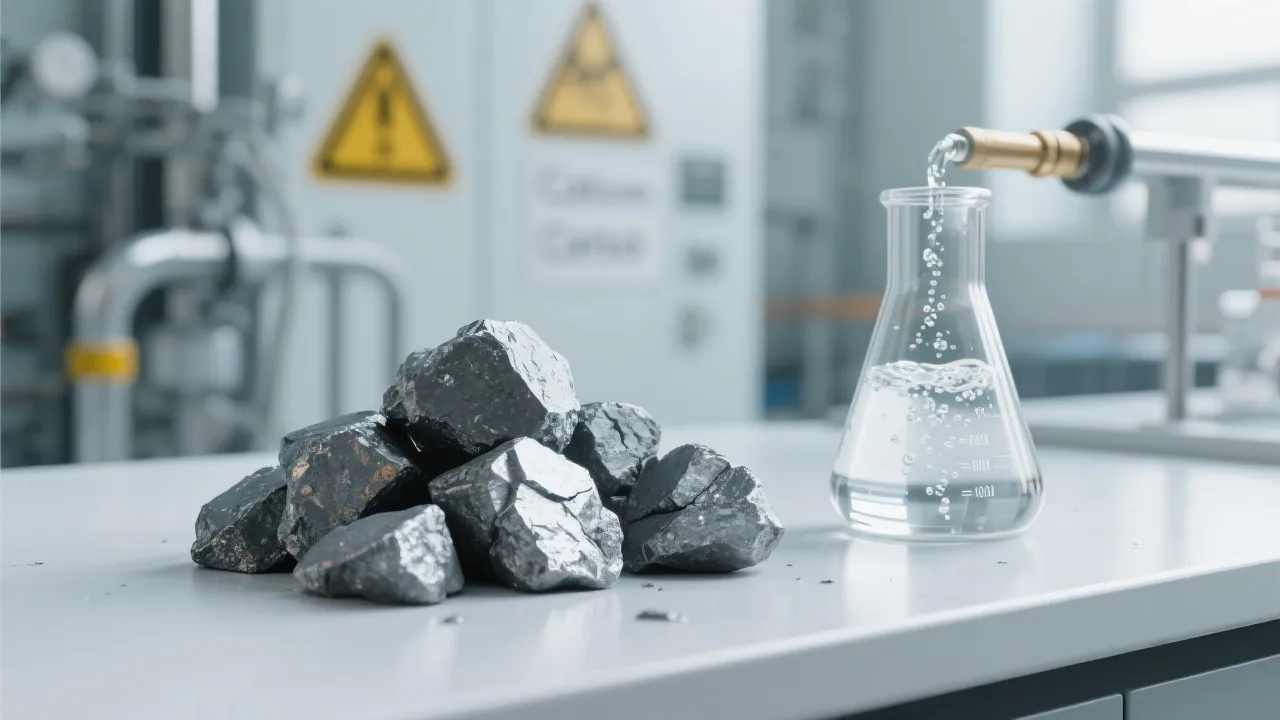
This article explains the core chemistry behind generating acetylene (C2H2) from calcium carbide (CaC2) and water, focusing on the ionic exchange and hydrolysis pathway that produces acetylene gas and calcium hydroxide. It highlights the strongly exothermic nature of the reaction, why uncontrolled addition of water or poor heat dissipation can escalate pressure and ignition hazards, and how gas purity impacts operational risk. Particular attention is given to calcium phosphide impurities: when present in low-purity carbide, it can react with water to form phosphine (PH3), a highly flammable contaminant associated with flash fires and explosive incidents in acetylene generation systems. Based on common laboratory workflows, the article outlines a practical safety framework—ventilation requirements, anti-backfire measures, suitable reactor and tubing materials, controlled feed strategies, and safe gas-handling practices—aimed at helping researchers and lab managers standardize SOPs and prevent accidents. For risk reduction, it also notes that choosing high-purity calcium carbide (≥95%) can significantly lower the likelihood of phosphine formation and improve overall acetylene quality. Produced for global laboratory settings, the guidance supports safer, more reliable acetylene generation and compliance-minded chemical handling with Lonway Chemical supply considerations in mind.
How Calcium Carbide Generates Acetylene: Reaction Mechanism, Heat Release, and Non‑Negotiable Lab Safety
Acetylene generation from calcium carbide (CaC2) looks deceptively simple—add water, collect gas. In practice, it is a strongly exothermic, impurity‑sensitive process where small procedural mistakes can create large consequences: pressure spikes, flashback ignition, and (in low‑purity carbide) toxic and potentially pyrophoric byproducts such as phosphine (PH3). This guide explains the underlying chemical mechanism in clear steps and translates it into a lab-ready SOP designed for researchers and laboratory managers who need repeatable results and defensible safety controls.
1) The Core Chemistry: What Really Happens When CaC2 Meets Water
The overall reaction is well known:
CaC2 + 2H2O → C2H2 ↑ + Ca(OH)2
Practical implication: one solid reagent produces a flammable gas plus an alkaline slurry (calcium hydroxide), so both gas handling and caustic waste control matter.
Mechanistic view (why the reaction is fast and hot)
Calcium carbide can be understood as a lattice containing Ca2+ and the acetylide dianion C22−. When water is introduced, the acetylide is protonated in two steps, producing acetylene (HC≡CH). In parallel, Ca2+ binds hydroxide to form Ca(OH)2. The strong driving forces are (1) formation of stable Ca–O bonds and (2) conversion of a highly basic acetylide species into a neutral gas that escapes the system, continuously shifting equilibrium forward.
Reaction process map (lab logic)
Wetting & dissolution: water contacts CaC2 surface; local pH rises rapidly.
Precipitation: Ca(OH)2 forms an alkaline slurry that can coat particles and alter rate.
Gas release: acetylene bubbles out; any restriction can translate heat into pressure.
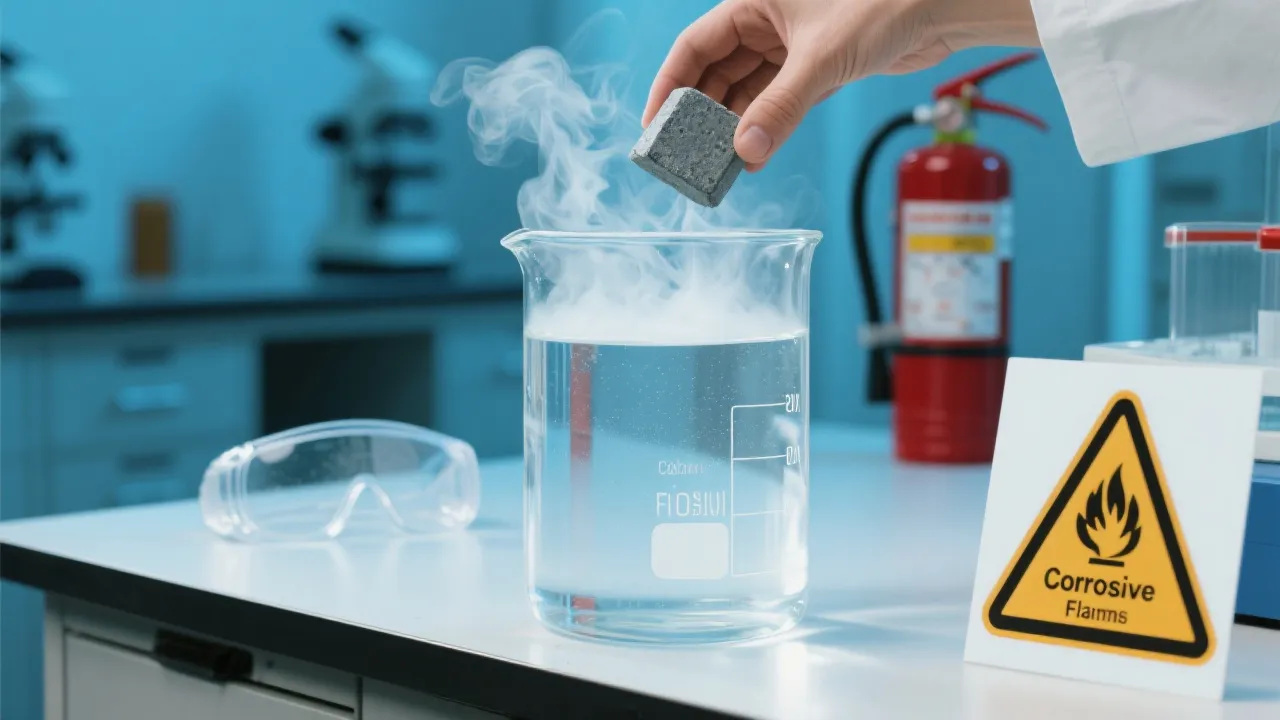
Heat release is not a footnote. Reported heats of reaction are typically on the order of ~120–130 kJ per mole of CaC2 under standard conditions (values vary by reference and practical setup). In real glassware, that thermal energy can raise local temperature quickly—enough to accelerate gas evolution, dry reactive residues, and worsen flashback risk if ignition sources exist.
2) The Hidden Risk: Impurities and Why Phosphine (PH3) Changes the Safety Math
Commercial calcium carbide may contain inorganic impurities from raw materials and furnace conditions. One of the most safety‑relevant is calcium phosphide (commonly represented as Ca3P2), which reacts with water to produce phosphine:
Ca3P2 + 6H2O → 2PH3 ↑ + 3Ca(OH)2
PH3 is highly toxic. Depending on composition and conditions, it can also contribute to spontaneous ignition behavior in contaminated gas streams.
Why “low‑purity carbide” is not just a yield problem
In decision‑stage procurement, labs often compare carbide sources by cost per kilogram, but safety performance is driven by impurity profile. Even trace phosphide can generate measurable PH3 in the headspace—an exposure and ignition concern that is easy to underestimate during short runs. For risk reduction, many facilities specify higher grades: choosing calcium carbide with purity ≥95% can significantly reduce the likelihood of phosphine generation and improve reproducibility of acetylene quality for downstream experiments.
3) Lab SOP: A Safer, More Repeatable Way to Generate Acetylene
A defensible SOP aims for three outcomes: rate control (avoid runaway), pressure control (avoid over‑pressurization), and ignition control (avoid flashback/static sparks). Below is a field‑tested structure that can be adapted to your institutional EHS requirements.
Reaction vessel: robust, compatible with alkaline slurry; avoid thin glass if thermal shock is likely. Use vessels designed for gas evolution where possible.
Controlled water addition: addition funnel, metering pump, or drip feed to modulate reaction rate.
Pressure relief: bubbler or relief path to prevent sealed‑system pressure buildup. Never operate as a closed system.
Flashback protection: check valve + flashback arrestor (especially if gas is routed to a burner or ignition source).
Ventilation: chemical fume hood or local exhaust. Target face velocity commonly around 0.5 m/s (100 fpm) depending on local standards.
Gas detection mindset: at minimum, treat acetylene and impurity gases as potential exposure hazards; establish monitoring/odor complaint response.
Step-by-step operational controls
Pre-check: confirm hood airflow, remove ignition sources (hotplates, open flames, sparking tools), ground any equipment that may accumulate static.
Charge carbide dry: handle CaC2 with dry tools and keep containers closed; moisture uptake can start reaction prematurely.
Start with small scale: pilot at the lowest feasible mass, then scale only with documented controls.
Initiate drip addition: add water slowly; allow temperature and bubbling to stabilize before increasing rate.
Maintain a clear gas path: prevent Ca(OH)2 slurry from clogging outlets; clogging converts heat into pressure.
Post-run purge/vent: ensure residual gas is safely vented/treated. Keep system under ventilation until fully cooled and no bubbling occurs.
Waste handling: calcium hydroxide slurry is caustic; neutralize and dispose per local regulation.
Container selection and what to avoid
Avoid improvised sealed bottles or thin-walled containers. If acetylene is routed into downstream equipment, avoid materials incompatible with alkaline aerosols. Use tubing and fittings rated for your expected temperature and chemical exposure. A common failure mode is “temporary” tubing softening or loosening under heat, leading to leaks in the hood or, worse, outside it.
Quick risk checklist (printable logic)
Risk trigger
Control that actually works
Fast water addition → runaway bubbling
Metered drip feed; thermal stabilization pauses
Restricted outlet → pressure build
Bubbler/relief path; anti-clog design; never sealed
Ignition source near gas stream
Fume hood, no flames, flashback arrestor + check valve
Low-purity carbide impurities
Specify grade; aim for ≥95% purity to reduce PH3 risk
4) Common Misconceptions That Cause Real Accidents
Misconception A: “If the gas smells odd, it’s just acetylene.”
Odor is not a reliable control. Impurity gases may be present at concentrations that are hazardous well before they are unmistakable. Treat any unusual odor as an indicator to stop, ventilate, and review carbide grade and setup integrity.
Misconception B: “More water means safer because it dilutes heat.”
In practice, rapid addition increases contact area, accelerates kinetics, and can push the system into violent foaming and aerosol carryover. Safer operation comes from controlled addition, not simply “more water.”
Misconception C: “A tight cap prevents leaks, so it’s safer.”
A tight cap without engineered relief transforms a gas generator into a pressure vessel. Even small runs can build pressure fast. Use designs intended for continuous venting or relief, and keep the entire gas path under ventilation.
Procurement Note for Labs: Purity, Consistency, and Documentation Matter
For research reproducibility and safety governance, procurement should be aligned with EHS: define acceptable impurity limits, require batch documentation when possible, and standardize the grade across teams so “same experiment” truly means the same gas quality. In many lab environments, specifying high-purity calcium carbide (≥95%) reduces variability and lowers the probability of PH3-related hazards—an operational advantage that often outweighs the short-term savings of lower grades.
Need High‑Purity Calcium Carbide for Cleaner Acetylene and Safer Handling?
For labs and industrial R&D teams that want tighter control over acetylene generation, specifying carbide purity and consistency is one of the simplest upgrades you can make—without changing your chemistry.
.png?x-oss-process=image/resize,h_500,m_lfit/format,webp)



 33
|
33
|



.png?x-oss-process=image/resize,h_600,m_lfit/format,webp)